

 Products
 Contact
 Call
10-11-2026
Materials used in buildings, bridges, vehicles, machines and everyday products must be strong and of high quality. Whether it’s a metal component or a plastic one, it should be able to handle the forces it faces during use without breaking or stretching beyond its limits. That’s what a tensile testing machine helps check. It measures how a material behaves when it is pulled from both ends. The test shows how much force the material can withstand before it stretches, changes shape or breaks. Using the results, manufacturers and engineers make well-informed business decisions, such as choosing the right materials, maintaining product quality and preventing weaknesses. If you want to understand the importance of machine used for tensile testing, then this post is for you. Here, we will walk you through the importance of tensile testing machine, along with its working. So, without any further ado, let’s get started…
Tensile Testing Machine – What Is It?
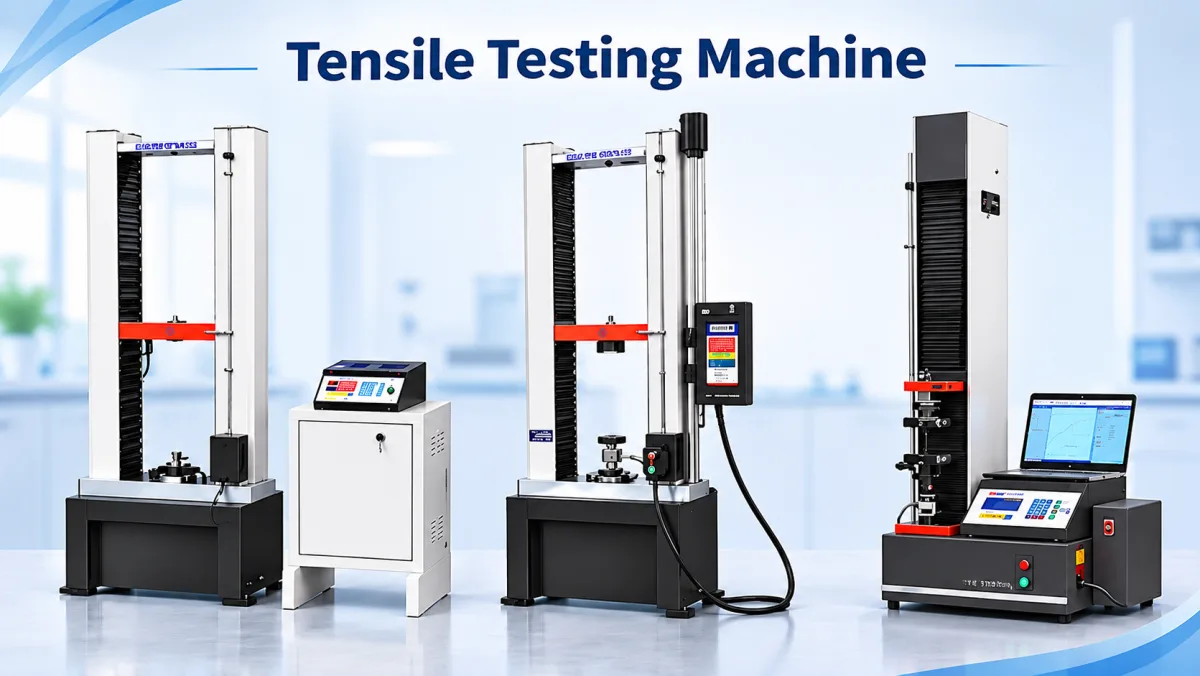
A tensile testing machine, popularly known as universal testing machine (UTM), is a device used to measure the strength and stretching behaviour of materials when a pulling force is applied to them. It supports multiple types of tests. These machines are often used in manufacturing, construction, automotive production, research laboratories and several other industries to test metals, plastics, rubber, wires, textiles and other materials.
The machine holds a material sample between two grips, pulls it from both ends, and measures how much force it can handle and how much it stretches. The test continues until the material reaches the required limit or breaks. The results help engineers check the material's strength and understand whether it meets the required standards.
How Does a Tensile Testing Machine Work?
A tensile testing machine has a very simple testing process to measure force and stretching. Here is how it works; take a look…
Step 1: Preparing the sample: The process of testing begins with the preparation of sample. The sample is prepared according to the required testing standards. The sample’s dimensions are measured before testing so that its accurate strength can be calculated.
Step 2: Placing the sample: The sample is held firmly between two grips to prevent slipping. It must be placed correctly to get accurate test results.
Step 3: Applying the pulling force: The machine gradually pulls the sample from both ends. As the force increases, the material may stretch, bend, or develop cracks.
Step 4: Measuring the results: The machine records the force applied and the amount the sample stretches. These measurements help determine the material's tensile strength, elongation and other properties.
Step 5: Checking the test results: The test continues until the sample breaks or reaches the set limit. Engineers use these results to check whether the material is suitable for its intended use or not.
Tensile testing helps businesses understand how a material behaves when exposed to pulling forces and make well-informed business decisions.
Why Is a Tensile Testing Machine Important for Measuring Material Strength?
A tensile testing machine plays a crucial role when it comes to testing accurate strength of a material. Here are some of the best reasons why you need one. Take a look…
1. It Helps Measure the Strength of Materials
A tensile testing machine measures how much pulling force a material can handle before it stretches or breaks. These results help engineers compare materials and choose the right one for intended applications.
2. It Helps Identify Material Weaknesses or Defects
Using a weak or defecting material in the production can be hazardous. Therefore, identifying the weaknesses before the material is used in production is crucial. Two materials may look similar but react differently to force. One may stretch before breaking, while another may break suddenly. Tensile testing helps identify these differences and detect weak materials before they reach customers.
3. It Supports Quality Control
Maintaining consistent quality is important, especially when manufacturing products in large quantities. Material quality can vary due to changes in raw materials or production conditions. That’s when tensile testing comes in handy. It helps manufacturers check whether each batch meets the required standards or not. If a material fails the test, they can instantly find the cause and fix the problem. This helps manufacturers prevent wastage, supplying defective products and customer complaints.
4. It Helps Compare Different Materials
Engineers use tensile testing machine to check the strength and flexibility of different materials. By testing samples under the same conditions, they can see which material can handle more force and how much it stretches before breaking. Using the test results, they can choose the most suitable material for a specific application.
5. It Helps Manufacturers Choose the Right Materials
Choosing the right material is very important for manufacturers. The material that you choose must have the strength and flexibility needed for its intended use. Tensile testing allows engineers to compare different materials based on their measured properties and choose a suitable option for each application.
6. It Helps Measure Elongation and Flexibility
Material strength is not the only thing that matters. Engineers also need to know how much a material can stretch before breaking. Elongation measures this stretch as a percentage of the material's original length. Materials that stretch more may be suitable for applications that need flexibility, while those that stretch less may be better for applications that need to hold their shape. A tensile testing machine measures this stretch and helps engineers decide whether a material is suitable for its intended use.
7. It Improves Product Safety and Reliability
Material failure can lead to serious problems, particularly in construction, transportation and industrial manufacturing. A component that breaks under unexpected force can damage equipment, hamper work or cause safety problems. Testing materials before use helps manufacturers find possible defects. Tensile testing checks materials such as metal wires and structural parts that face pulling forces and helps engineers choose suitable materials, design better products and maintain quality.
8. It Helps Meet Industry Standards
Specific standards are followed across industries to ensure materials meet quality and performance requirements. A tensile testing machine helps manufacturers, research centres and laboratories check whether a material meets these standards. However, the machine must be suitable for the test, properly calibrated and used with the correct sample size and testing method for reliable performance and accurate results.
Material Properties That Tensile Testing Measures
Tensile testing is conducted to measure several important material properties, depending on the equipment, sensors and testing method. Here are the most important ones; take a look…
-
Tensile Strength: Tensile testing measures the maximum tensile stress a material withstands during the test.
-
Yield Strength: It measures the stress at which a material begins to deform permanently.
-
Elongation: It measures the percentage increase in the material's length during stretching.
-
Young's Modulus: It measures a measure of a material's stiffness, determined from the relationship between stress and strain within the elastic range.
-
Breaking Strength: It measures the load or stress associated with the material breaking.
These properties help engineers understand how a material responds to force and check the suitability of the material for a particular application.
Industries That Commonly Use Tensile Testing Machines
Tensile testing machines are used across several industries, such as:
-
Construction: Engineers and testing laboratories use tensile tests to test steel reinforcement bars, metal wires and other materials where tensile properties are important.
-
Automotive: Manufacturers test metals, plastics and other materials to check whether they meet the required strength and stretching limits before using them in vehicle components.
-
Manufacturing: Companies use tensile testing machine to check raw materials and finished components to ensure quality and prevent production defects.
-
Polymer: Tensile testing helps plastic and rubber product manufacturers determine strength and elongation of plastic films, rubber sheets and moulded components.
-
Textile: Manufacturers test fibres, yarns and fabrics to check their resistance to pulling forces.
-
Research Laboratories and Educational Institutes: Researchers and students use tensile testing machines in laboratories to study material behaviour and compare the properties of different samples.
Tips to Buy the Best Tensile Testing Machine
Undoubtedly, tensile testing machines play a crucial role in many industries. However, it is crucial for you to choose the right machine to ensure accurate and useful results. Here are some tips to follow when buying a machine for tensile testing. Take a look…
-
Consider Testing Capacity: Take testing capacity in mind when selecting a machine. Make sure the machine can handle the maximum force required for your samples.
-
Check Material Type is Tests: Check whether the machine is suitable for the materials that you intend to test.
-
Check Mahcine’s Accuracy: Review the machine's measurement capabilities and check whether they meet your testing requirements.
-
Testing Standards: Ensure that the machine that you buy supports the applicable testing methods and standards.
-
Select a Trustworthy Testing Machine Manufacturer: Make sure you buy your machine from a reliable manufacturer as it ensures accurate test results, good machine quality and reliable after-sales support.
-
Calibration and Service: Make sure the manufacturer provides calibration support, maintenance, spare parts and technical assistance as well.
The Bottom Line
So, there you have it: the reasons why a tensile testing machine is important for measuring material strength. Hopefully, this article has been informative for you. A tensile testing machine plays an important role in measuring material strength. It shows how a material behaves when a pulling force is applied and helps determine tensile strength, elongation and other properties that influence the performance of materials in real-world applications. However, buying from a trustworthy testing machine manufacturer is crucial to ensure reliable performance and results. Canan Testing Machines & Calibrations LLP is a leading tensile testing machine manufacturer in India. We offer machines for testing a wide range of materials, including plastic, metals, steels, alloy, wires and so on. Also, we will help you with installation and proper calibration. Feel free to contact Canan for more details.